
- Price 3200
- Colour: Brown
- Dimensions: 2–10 meters
- Weight: >200kg
- Model number: OAdino-223
- Shipping: Road transport or air freight
- Minimum order: 1 unit minimum order
- Dispatch: Dispatch in 15–40 days after payment
- Business options: Purchase, rental or project cooperation
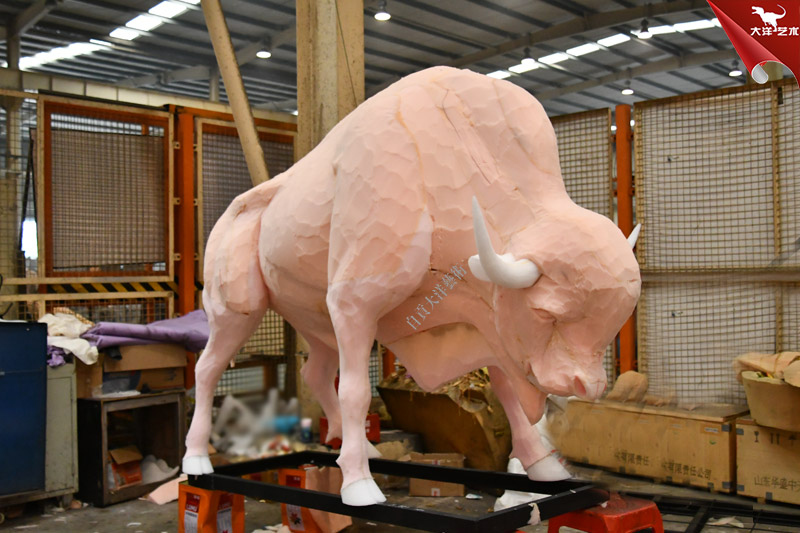
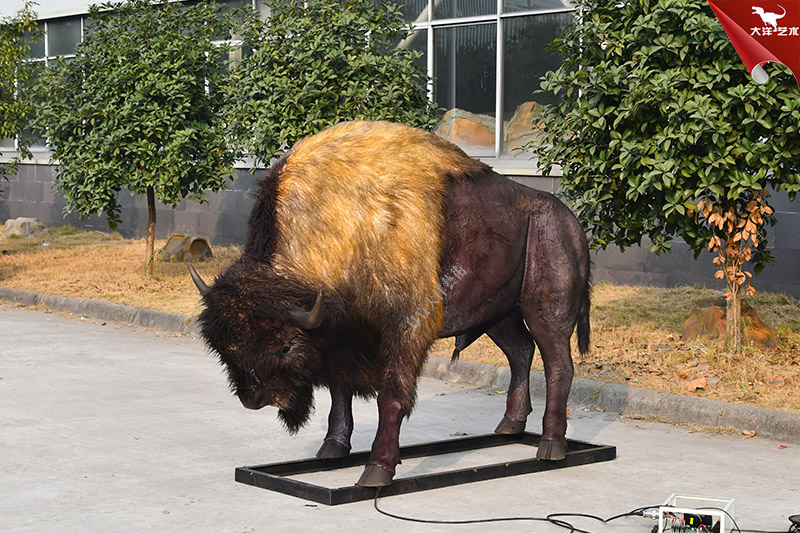
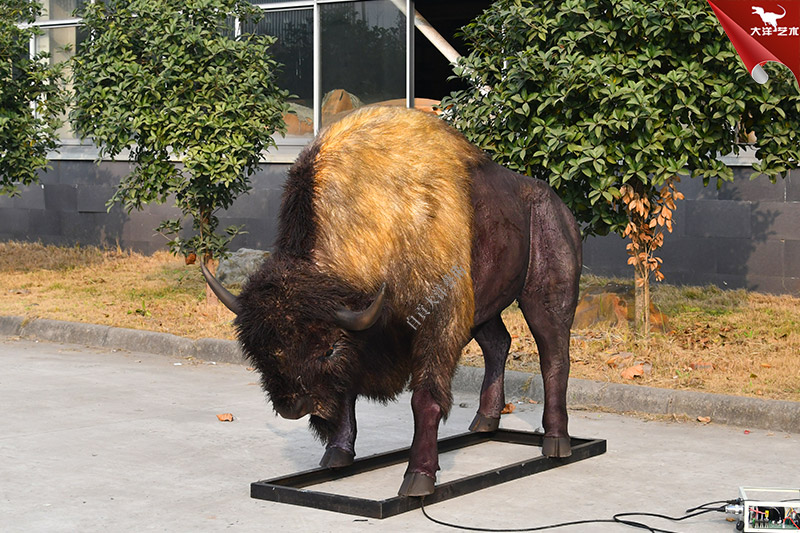
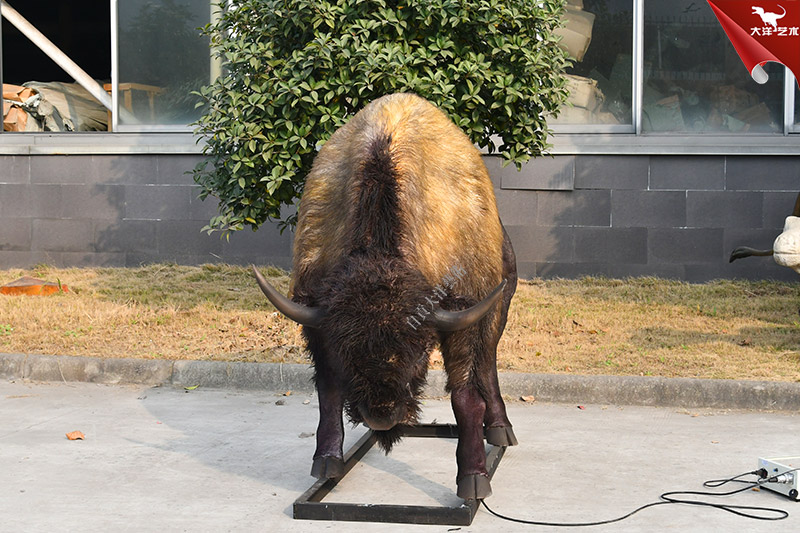
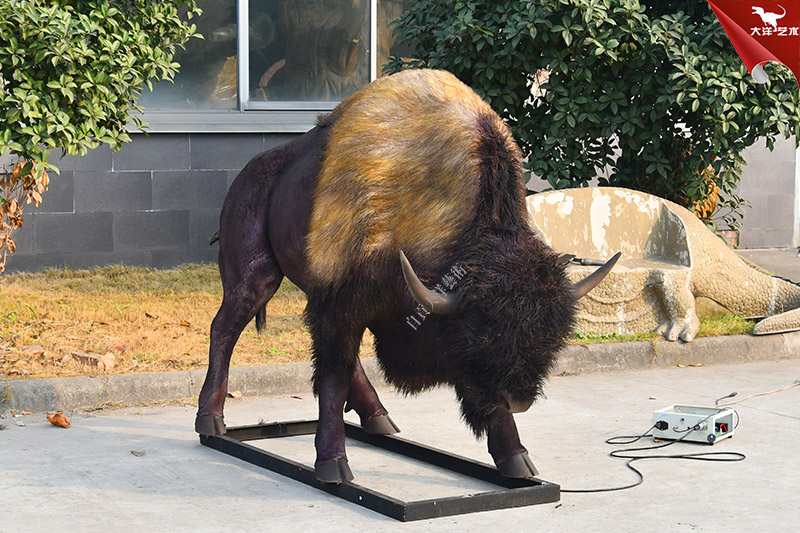
Realistic bison replica, created at a 1:1 scale. Hand-crafted with applied fur, this model features a lifelike appearance and is capable of movement and sound. Designed for use in tourist attractions, shopping malls, and commercial exhibitions.
Bisons are massive animals, with a body length of 250–330 cm, a tail length of 70–105 cm, a shoulder height of 165–220 cm, and a weight of 650–1,000 kg. Males are larger than females. Their fur is predominantly brownish-tan or black; the nose and lips are grayish-white, and the fur on the lower legs—below the knees—is white. Both males and females possess horns, though those of the females are smaller. The horns of the males are highly curved; they emerge from a raised ridge on the frontal bone, rising vertically before curving outward, then upward again, with the tips finally curving inward and slightly backward. They can reach a length of 60–100 cm.
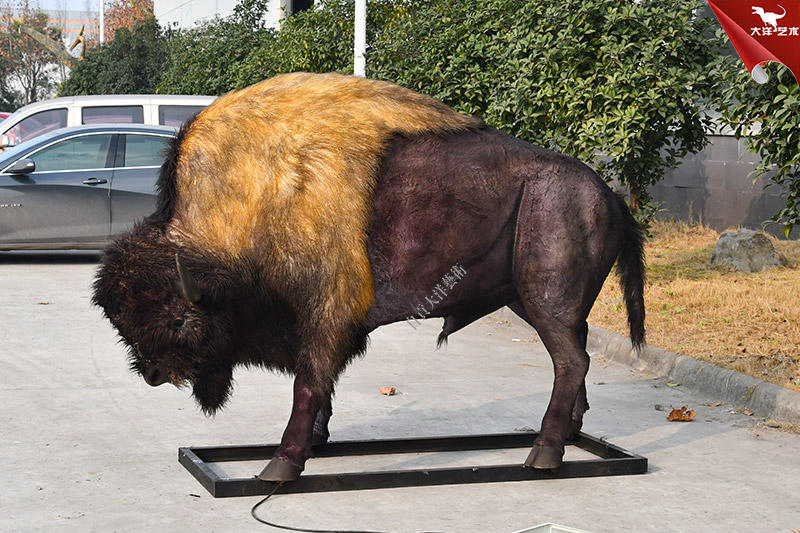
Realistic bison replica, created at a 1:1 scale. Hand-crafted with applied fur, this model features a lifelike appearance and is capable of movement and sound. Designed for use in tourist attractions, shopping malls, and commercial exhibitions.
Bisons are massive animals, with a body length of 250–330 cm, a tail length of 70–105 cm, a shoulder height of 165–220 cm, and a weight of 650–1,000 kg. Males are larger than females. Their fur is predominantly brownish-tan or black; the nose and lips are grayish-white, and the fur on the lower legs—below the knees—is white. Both males and females possess horns, though those of the females are smaller. The horns of the males are highly curved; they emerge from a raised ridge on the frontal bone, rising vertically before curving outward, then upward again, with the tips finally curving inward and slightly backward. They can reach a length of 60–100 cm.