
- Price 3200
- Colour: Brown
- Dimensions: 2–10 meters
- Weight: >200kg
- Model number: OAdino-008
- Shipping: Road transport or air freight
- Minimum order: 1 unit minimum order
- Dispatch: Dispatch in 15–40 days after payment
- Business options: Purchase, rental or project cooperation
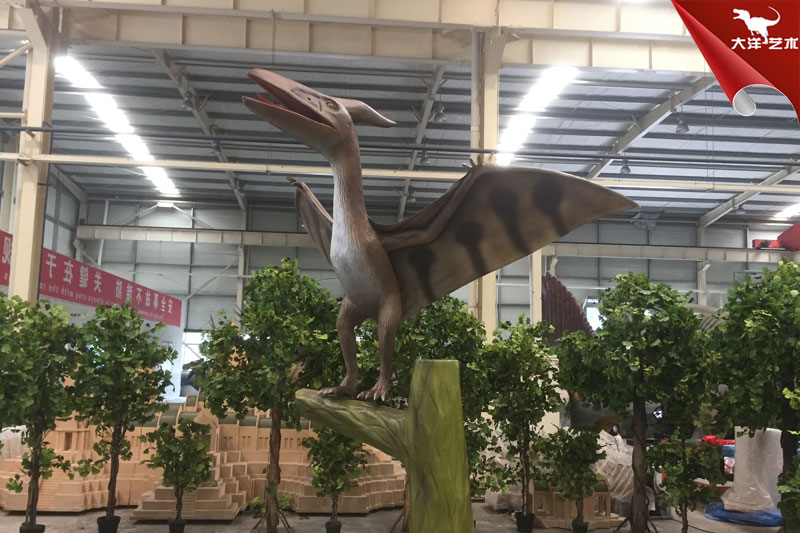
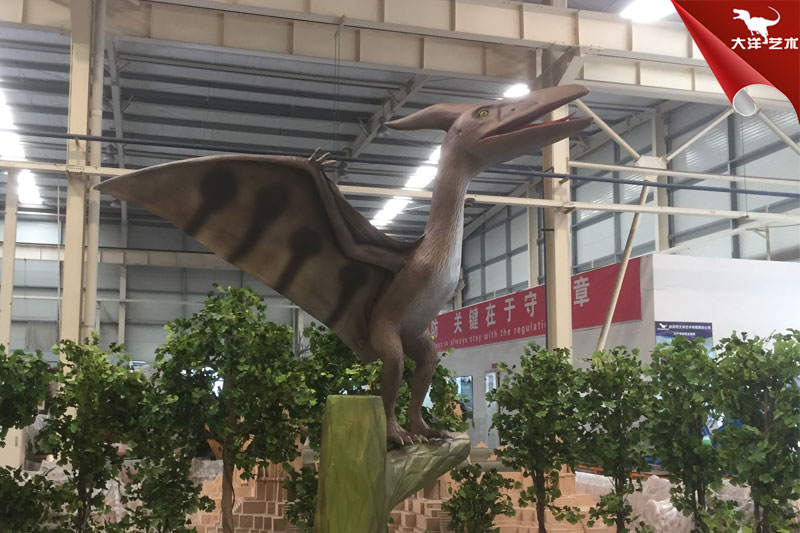
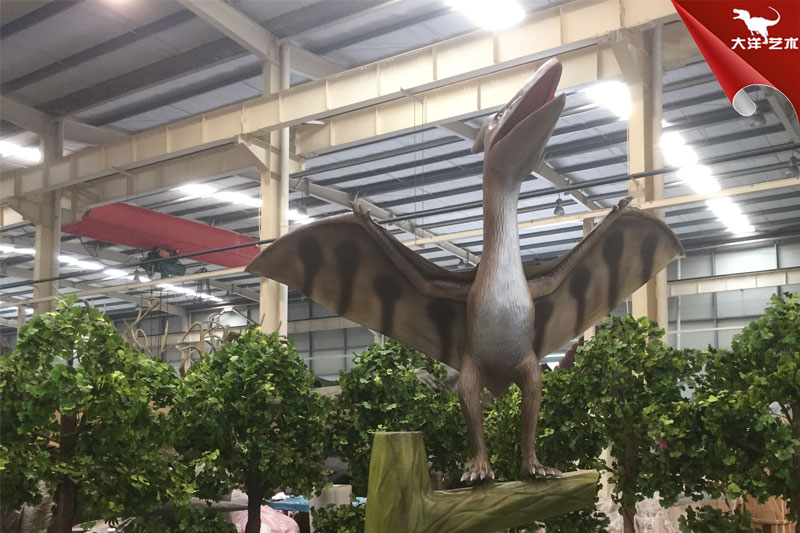
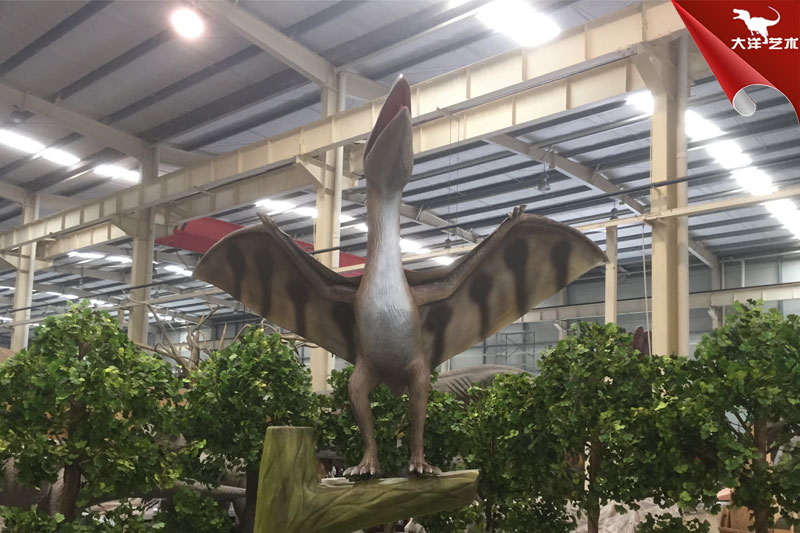
Pterosaurs (Pterosauria) are an extinct group of reptiles, comprising over 100 known species. [1] Although they lived during the same era as dinosaurs, pterosaurs are not dinosaurs. [2] The name is derived from Greek, meaning "winged lizard," and refers to a clade of flying reptiles. They existed from the Late Triassic to the end of the Cretaceous period—approximately 210 million to 65 million years ago. Pterosaurs were the first vertebrates to achieve powered flight; their wings consisted of a skin membrane stretching from the sides of the body to their elongated wing fingers. Earlier species featured long, tooth-filled jaws and long tails, while later species had significantly shorter tails and were toothless. Pterosaurs varied greatly in size—ranging from small, bird-like forms such as Nemicolopterus to some of the largest flying creatures to ever inhabit Earth, such as Quetzalcoatlus and Hatzegopteryx, which boasted wingspans exceeding 12 meters, 10-centimeter-long teeth, and massive, pointed beaks.
Flying reptiles—commonly referred to as "flying dragons." The largest pterosaurs had a wingspan of 6–8 meters. In China, fossils have been discovered in two locations: one in the Karamay region of the Junggar Basin in Xinjiang—referred to as Dsungaripterus—which had a wingspan of up to 3.5 meters; and another in Shangpan, Linhai, Zhejiang—referred to as Linhai Pterosaur. Both sites date back to the Cretaceous period (approximately 137 million to 65 million years ago).
An order of ancient reptiles, representing a lineage that evolved for aerial life. They possessed long heads, long necks, large eyes, and long, pointed snouts. A thin, leathery membrane stretched between the fourth digit of their forelimbs and the sides of their bodies, enabling flight. They inhabited coastal and lakeside environments and fed primarily on fish. This group is divided into three suborders: Rhamphorhynchoidea, Pterodactyloidea, and Dsungaripteroidea. They were widely distributed across the globe during the Jurassic and Cretaceous periods.